
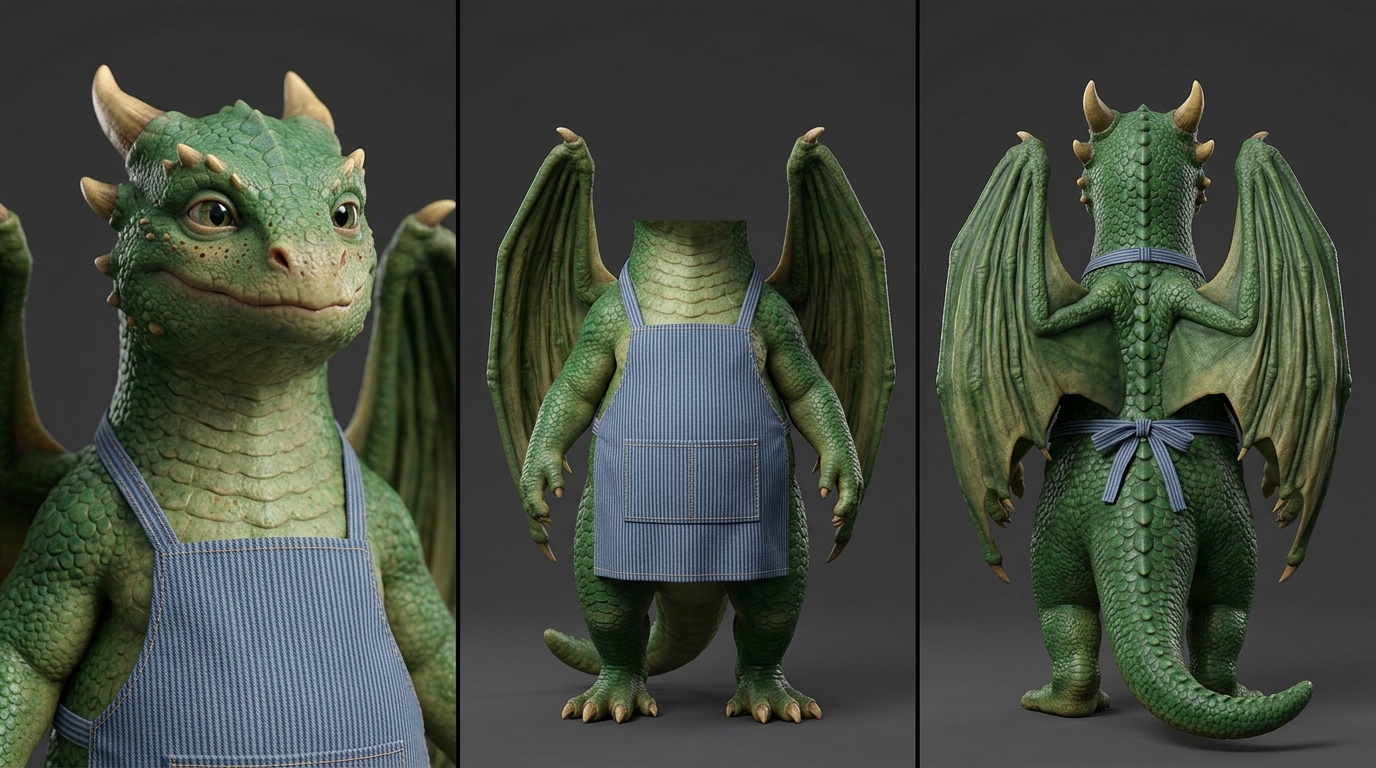
Make your characters recognizable
Give each character a clear appearance: face, proportions, clothing and distinguishing details. Approve a reference image, then reuse that character in the scenes you generate.
Keep references for recurring locations and important props too. A shared visual direction helps your story feel connected as the camera angle, action and setting change.
Carry the same cast through your scenes
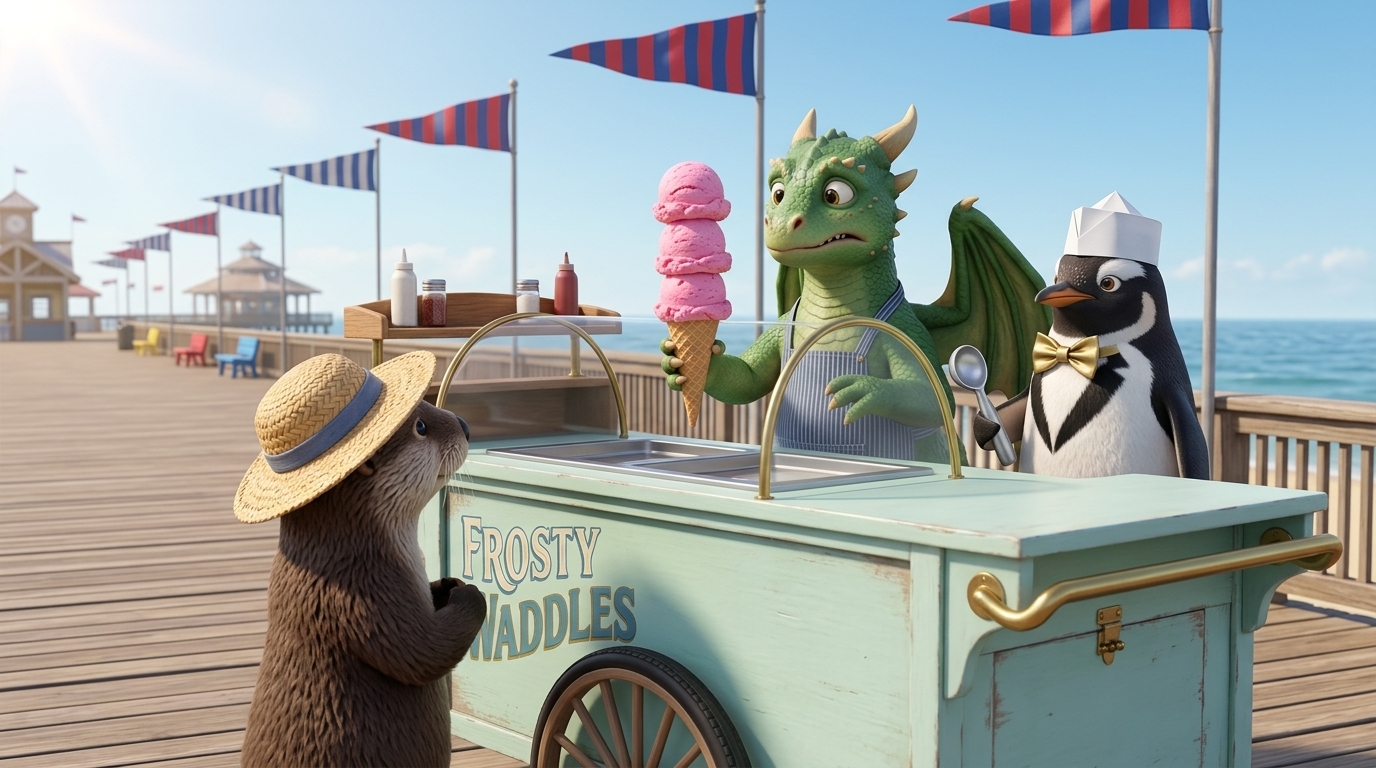
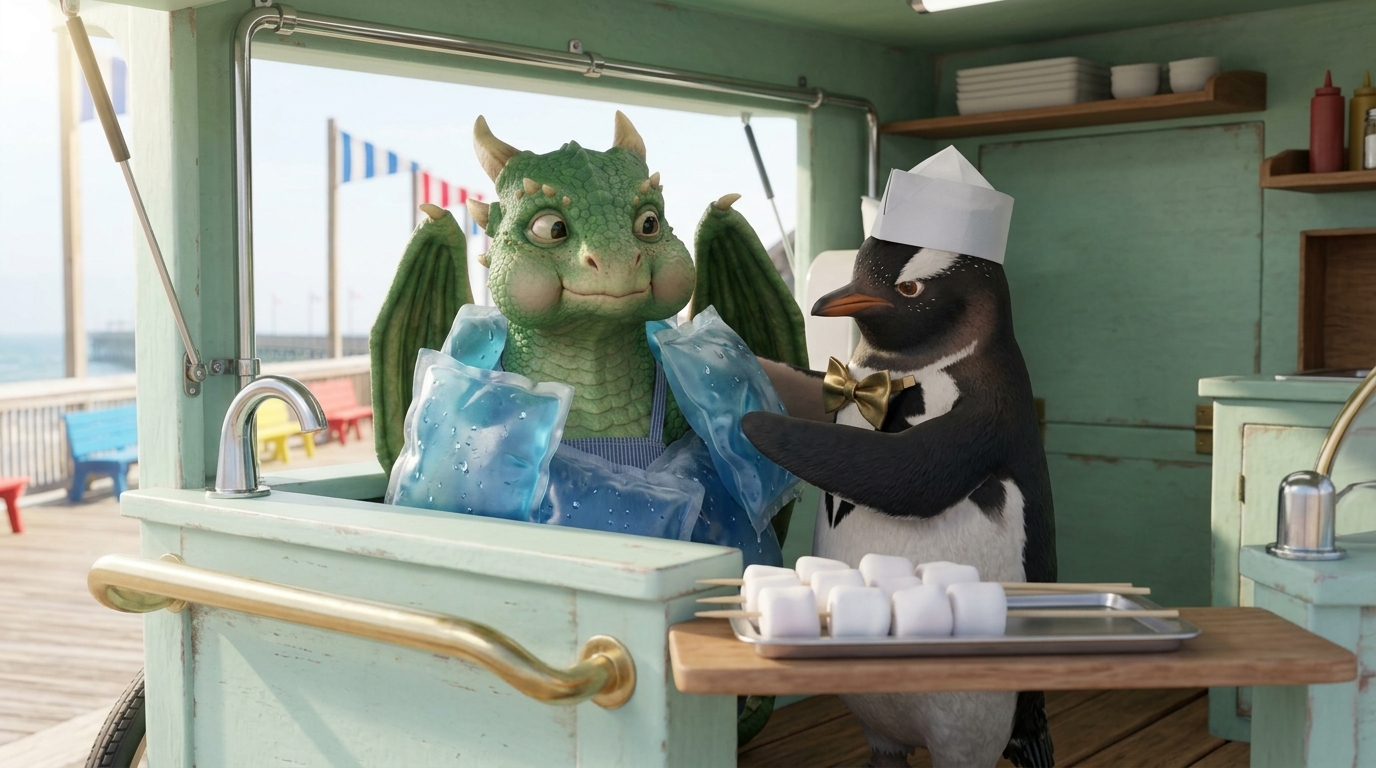

A dragon’s scales and apron. A penguin’s paper cap and bowtie. Distinct details help a cast stay recognizable across changing scenes.
Compare each generated frame and clip with your approved references. You can refine an individual shot when its appearance or action needs another pass. See the cast in motion.
Voice consistency: narrator and cast are different
A narrated series can save a default narrator that is inherited by newly created narrated episodes. You review each generated voiceover read before animation, checking the wording, pronunciation, pacing and tone.
Dialogue characters have their own voice choice, approved voice sample and performance direction. These can be kept with a recurring series cast member and reused with the character’s visual reference. The supported video model uses the speaker references and voice samples to generate English on-camera dialogue.
Character references anchor appearance; narrator selection and cast voice samples anchor sound. These are reusable production inputs, not a promise of perfectly identical output. Listen to every performance. See the narration and dialogue workflows and how they carry into episodes.
Review identity, setting and performance separately
Check the character
Compare the face shape, eye spacing, body proportions, clothing, materials and distinguishing details against the reference.
Check the world
Inspect recurring props, the layout of a location, light direction and scale. A matching face in a changing room can still break continuity.
Check the performance
Listen to voice reads and review movement. Narration identity, dialogue delivery and visible animation need their own checks.
Correct the smallest relevant part
Refine the frame or shot direction that caused the problem and regenerate as needed. Changes to upstream assets may require downstream work to be updated.
Carry the cast into the next chapter
Series support shared character references, voice samples, style direction and production defaults. Set up a recurring episode workflow when you want those ingredients available again. Reuse helps establish continuity; it does not remove the need to state the next episode's context or review its outputs.
For an original standalone story, start with the short-film workflow. Our worked guide also shows a case where the character looked right but performed the wrong action, and how the shot was corrected.
Questions before you start
Does a reference guarantee an identical character?
No. Generated output can vary. A shared reference provides a consistent input and a concrete review target; you still choose which frames and clips to accept.
Are consistent visuals and consistent voices the same feature?
No. Visual identity uses character references; voice continuity uses voice selection or samples and performance direction. Review both.
Do retakes cost credits?
New generation uses credits and is quoted before confirmation. Approving an existing asset is separate from requesting another generated take.